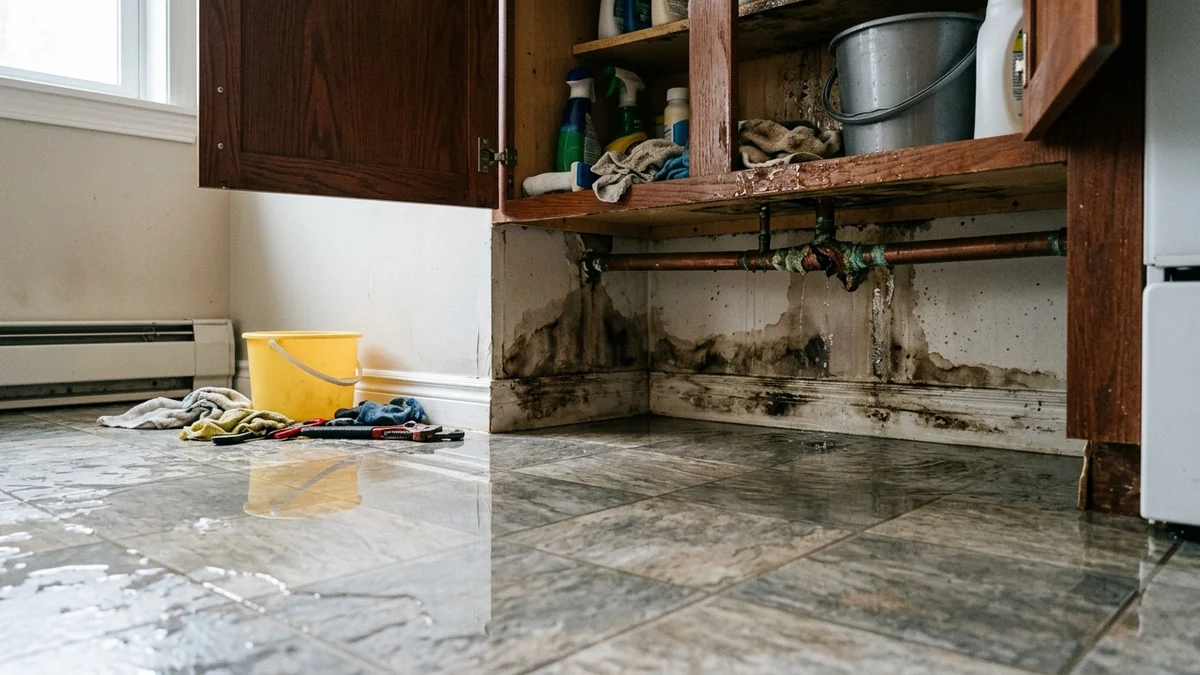
Slab leaks are uniquely stressful claims. The leak is under your concrete foundation, the damage shows up in floors and walls, and the repair involves getting to a pipe you cannot see. Florida homes, many built on slabs, see these claims often — and coverage answers are rarely simple. This guide explains the general principles so you can have an informed conversation with your insurer.
Need Help Right Now?
Talk directly with our restoration team. Free on-site assessment, plain-language answers, no pressure.
Call Now: (407) 557-9924What Is a Slab Leak, Exactly?
A slab leak is a leak in a water or drain pipe running beneath the concrete slab foundation of a home. Signs include warm spots on the floor, unexplained damp areas, buckling or warping flooring, the sound of running water when no tap is open, and a water bill that climbs without explanation. Because the pipe is under concrete, the leak is usually found by a plumber using detection methods, not by visual inspection.
How Does Sudden-vs-Gradual Apply to Slab Leaks?
The same principle that governs appliance leaks applies here, but slab leaks make it harder to prove. A pipe that fails suddenly and floods the home quickly looks like a sudden event. A pinhole leak that seeps for months, eroding soil and slowly warping floors, looks gradual — and gradual damage is generally excluded from standard policies.
Documentation is what tips the balance. A plumber's report describing the failure mode, photos of the damage progression, and a timeline of when symptoms first appeared all help your insurer classify the event. If you noticed a warm spot or a rising water bill weeks ago and waited, say so honestly and focus on what was done once the leak was confirmed.
What Parts of a Slab Leak Claim Are Usually Covered?
- Resulting water damage to the home — flooring, drywall, baseboards, and belongings damaged by the water — is generally the core of a covered claim, subject to your deductible.
- Access costs — the work to reach the pipe, such as cutting through flooring or concrete — may be covered in some policies and limited in others. Check your policy's wording on access.
- The pipe repair itself is often not covered, since the failed pipe is considered a maintenance item. Some policies cover access but not the pipe replacement.
- Foundation damage from long-term erosion is frequently excluded or limited. This is the most disputed part of slab leak claims.
Again, this is general guidance. Florida policies vary widely, and some include endorsements that change these answers. Read your policy or ask your agent which parts apply to you.
What Should I Do When I Suspect a Slab Leak?
- Confirm it with a plumber and get a written report on the leak location and failure.
- Photograph all visible damage — floors, walls, and any standing water — before cleanup or repair.
- Mitigate promptly. Extract standing water, start drying, and protect undamaged areas. Insurers expect reasonable steps to limit further damage.
- Notify your insurer early and ask whether they want an adjuster visit before access work begins.
- Keep every receipt and report. Detection reports, drying invoices, and repair estimates all support the claim.
Why Does Drying Matter for a Slab Leak Claim?
Slab leak water soaks flooring and wall bases, and moisture trapped under flooring feeds mold if left alone. Professional structural drying with verified moisture readings protects both your home and your claim: it shows the insurer that mitigation was done properly and prevents a second, mold-related problem. For the water removal phase, see our emergency water extraction service. Call (407) 557-9924 for a free assessment.
Disclaimer: This article is general Florida guidance only, not insurance advice. Coverage depends on your specific policy wording. Check your policy and speak with your insurer or agent about your claim.
Related services: structural drying, dehumidification services