Washing Machine and Appliance Leak Cleanup in Orlando, FL
Urgent greywater extraction and appliance closet drying.
Direct answer: Washing machine and appliance leak cleanup in Orlando requires shutting off supply valves, extracting soapy graywater with industrial vacuum extractors, removing moisture beneath cabinets and baseboards, and running desiccant dehumidifiers to dry subfloors within 24 to 48 hours. Orlando Rapid Restoration connects Orlando homeowners with licensed, insured local water damage restoration professionals. Call (407) 557-9924 for emergency dispatch.
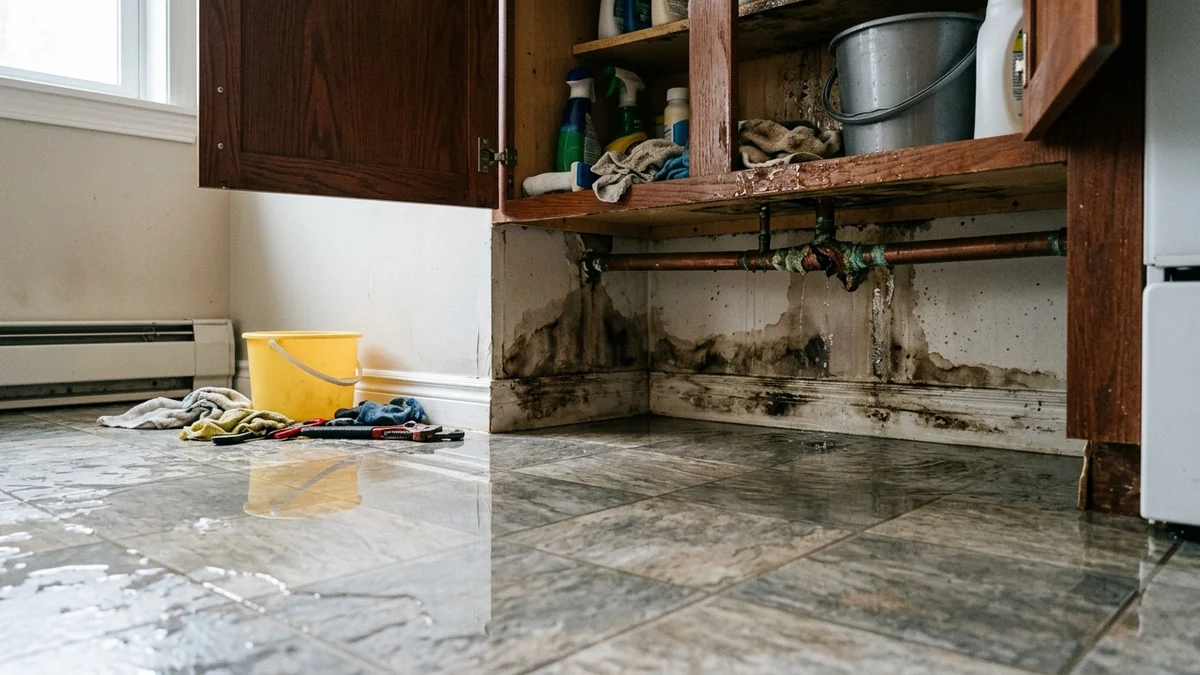
A cracked rubber washing machine supply hose suddenly bursts mid-cycle, dumping sixty gallons of soapy, gray water onto your laundry room floor. The water is rapidly flowing under your baseboards and into adjacent hallways, threatening your laminate flooring with severe swelling and warping. You need immediate extraction before the soapy residue ruins your subflooring permanently.
What This Service Covers
- Fast shutoff of high-pressure appliance water supply valves.
- High-velocity soapy water extraction from laminate, tile, and wood.
- Structural drying of laundry room and kitchen cabinets.
- Baseboard removal and behind-the-wall drying.
- Detergent residue cleaning and floor sanitizing.
Why This Happens in Orlando Homes
High municipal water pressure in many Orlando suburbs stresses rubber appliance supply hoses, causing them to crack and burst without warning. High humidity in Florida also corrodes metal connections on dishwashers and refrigerator ice-maker lines.
Our Process for Appliance Leak Cleanup
We extract soapy water, wash residues, and inject warm dry air beneath cabinets.
Source Isolation
We shut off the water valve behind the appliance and unplug the electrical connection to ensure a safe work area.
Detergent-Neutral Extraction
Standing soapy water is extracted, and we apply clean water rinses to remove sticky detergent residues from your floors.
Baseboard Venting
Baseboards are carefully removed, and we drill tiny, neat holes behind them to inject dry air into the wet wall cavities.
High-Velocity Air Circulation
Specialized air movers and LGR dehumidifiers are placed to evaporate water trapped beneath the subfloor.
Local Field Note
Kitchens in Mills 50 District mid-century homes often have original wood-look laminate floors that warp easily when exposed to appliance leaks. We recently saved a kitchen floor here after a dishwasher drain pump failed, completing the dry-out in just three days.
What Does Appliance Leak Cleanup Involve for Orlando Laundry Rooms and Kitchens?
Appliance leak cleanup in Orlando requires stopping high-pressure supply lines, extracting standing graywater, performing detergent-neutralizing rinses, and establishing negative-pressure drying beneath kitchen cabinets and laundry pedestals. When a washing machine internal solenoid valve fails or a supply hose ruptures under 60 PSI of city water pressure, tens of gallons of water discharge in minutes.
Because this discharge contains laundry detergents, surfactants, and dissolved fabric soils, simple surface mopping leaves a sticky chemical film that attracts soil and promotes mold. Professional crews employ truck-mounted extraction tools to draw soapy liquid from floor seams, followed by fresh-water extraction rinses. Technicians then apply EPA-registered antimicrobial washes before deploying commercial low-grain refrigerant (LGR) dehumidifiers through proven emergency water extraction protocols.
Why Are Second-Story Laundry Room Leaks High-Risk in Newer Orlando Communities?
Second-story laundry room leaks present severe structural hazards in newer master-planned Orlando developments like Lake Nona, Avalon Park, and Horizon West, where modern two-story architectural floor plans place washer-dryer suites on upper residential levels. When a washing machine overflows upstairs, water rapidly pools across tiled or linoleum laundry pans.
If the safety drain pan is missing or clogged, floodwater breaches thresholds and cascades through the plywood or OSB subfloor. Within minutes, water saturates fiberglass floor joist insulation and pools atop the first-floor ceiling drywall below. Heavy water weight can pull drywall screws through wet gypsum, leading to sudden ceiling collapse, destroyed light fixtures, and ruined first-floor furnishings. Dispatched restoration contractors immediately coordinate ceiling relief punctures and initiate targeted ceiling leak repair.
How Do Pinhole Leaks in Refrigerator Ice-Maker and Dishwasher Lines Cause Hidden Damage?
Pinhole leaks in refrigerator ice-maker lines and dishwasher supply tubes cause extensive hidden damage because flexible plastic (polyethylene) and thin copper tubing can slowly weep unnoticed behind heavy cabinetry for months. The constant slow drip of water does not immediately trigger pooling across the kitchen floor; instead, moisture wicks into raw cabinet particle board, drywall backing, and foundational concrete slabs.
By the time homeowners notice buckled floorboards or musty odors in neighborhoods like the Mills 50 District, substantial structural damage has already occurred. Restoration technicians use infrared thermal imaging to trace moisture footprints behind built-in dishwashers and refrigerators. Using specialized toe-kick drying injectidry systems, crews circulate dry, heated air into sub-cabinet voids to dry out base framing without demolishing custom granite or quartz countertops.
How Do Technicians Dry Subfloors to Prevent Luxury Vinyl Plank and Hardwood Cupping?
Technicians dry saturated subfloors by utilizing commercial floor mat extraction systems, desiccant air movers, and precision psychrometric monitoring to prevent hardwood cupping and luxury vinyl plank (LVP) adhesive failure. Modern waterproof vinyl plank prevents water from draining upward, effectively trapping graywater between the vinyl backing and the concrete slab or wooden subfloor.
Trapped water quickly degrades leveling compounds, rusts flooring fasteners, and rots wood sill plates. For hardwood installations, technicians deploy negative-pressure drying mats that draw moisture vapor out through the plank pores without tearing out original flooring. Technicians document drying progress daily with pinless and deep-probe moisture meters through standardized structural drying procedures.
What Are Category 2 Graywater Risks and Why Does Prompt Antimicrobial Treatment Matter in Florida?
Category 2 graywater poses significant biological risks because it contains dissolved organic matter, laundry soils, and chemical detergents that fuel explosive bacterial and fungal growth. Under Florida's ambient indoor temperatures—which often hover above 75°F when HVAC systems struggle—Category 2 graywater can degrade into highly contaminated Category 3 black water within 24 to 48 hours.
Failing to properly extract graywater allows bacterial colonization to produce foul odors and trigger airborne health hazards. Professional mitigation crews treat every exposed wood stud, concrete slab, and subfloor layer with EPA-registered botanical antimicrobials. After thorough sanitization and drying, Orlando Rapid Restoration connects you with trusted local rebuild contractors to install new baseboards, replace ruined subfloors, and finish drywall via complete reconstruction services. Call (407) 557-9924 for rapid dispatch.
Appliance Leak Comparison: Supply Hose Burst vs. Drain Overflow vs. Slow Ice Line
Household appliances fail in different ways, dictating the volume of water, contamination classification, and speed of subfloor damage:
| Appliance Leak Type | Discharge Volume & Speed | Water Category & Content | Subfloor & Cabinet Impact |
|---|---|---|---|
| High-Pressure Supply Hose Burst | 5 to 10 gallons per minute until supply valve is shut off | Category 1 clean water directly from municipal supply line | Rapid flooding across kitchen or laundry room; subfloor saturation |
| Washer Drain Pump Failure | 20 to 40 gallons released rapidly during discharge cycle | Category 2 gray water containing detergents, dirt, and bacteria | High risk of pad contamination; requires antimicrobial wash & extraction |
| Refrigerator Ice Maker Pinhole | Continuous micro-drip (gallons over weeks or months) | Category 1 escalating to Category 3 with mold and rot | Rotting sub-cabinet wood, softened subfloors, hidden mold under vinyl/tile |
| Dishwasher Float / Seal Blowout | 5 to 15 gallons scalding soapy water during active wash | Category 2 gray water with food grease and hot detergents | Trapped moisture beneath hardwood planks; subfloor adhesive breakdown |
Why is water from a washing machine leak particularly damaging?
Washing machine water is classified as Category 2 "gray water" because it contains detergents, fabric softeners, and organic soil from clothing. This chemical and organic mixture is highly corrosive to subfloors and provides an ideal food source for mold if not dried immediately.
Can warped laminate flooring be saved after an appliance leak?
If we begin extraction within the first few hours of the leak, we can often save laminate flooring using specialized floor-drying mats. However, if the laminate edges have already begun to swell and split, the core material is ruined and will need replacement.
How do you dry the space underneath kitchen cabinets?
We use a specialized drying system called an injectidry, which pumps warm, dry air through small holes drilled behind the cabinet toe-kicks. This dries the dark, hidden void beneath your cabinets without requiring us to tear out your expensive kitchen cabinetry.
How can I prevent appliance leaks in my Orlando home?
We highly recommend replacing standard rubber hoses with braided stainless steel hoses, which are far more resistant to pressure spikes. You should also inspect your refrigerator water lines and dishwasher connections annually for any signs of slow corrosion.
What should I do immediately when a washing machine or appliance leaks?
Immediately close the supply shutoff valves behind the appliance or shut the main water valve. Turn off power to the laundry or kitchen area at the breaker, and call (407) 557-9924 to connect with local restoration contractors.
Why do upper-floor laundry room leaks cause severe ceiling damage in Orlando homes?
In two-story homes, water pooling on second-floor laundry decking rapidly penetrates subfloor seams and saturates ceiling drywall below, risking ceiling collapse and electrical shorts in lower-level light fixtures.
How do technicians dry water trapped beneath dishwashers and kitchen cabinets?
Technicians remove toe-kicks and deploy specialized high-pressure air injection systems that force warm, dry air through hidden cabinet voids, evaporating trapped subfloor moisture without tearing out stone countertops or cabinetry.
Can hardwood or luxury vinyl plank flooring be saved after an appliance flood?
Yes, if mitigated quickly. Technicians use commercial floor-mat vacuum suction panels to extract bound moisture from subflooring beneath planks before wood fibers permanently cup or vinyl adhesives emulsify.
Urgent Appliance Leak Cleanup
Every hour gray soapy water sits, subfloors buckle and rot. Contact our local drying experts now to save your kitchen and laundry floors.