Water Heater Leak Cleanup in Orlando, FL
Urgent tank rupture and closet dry-out services.
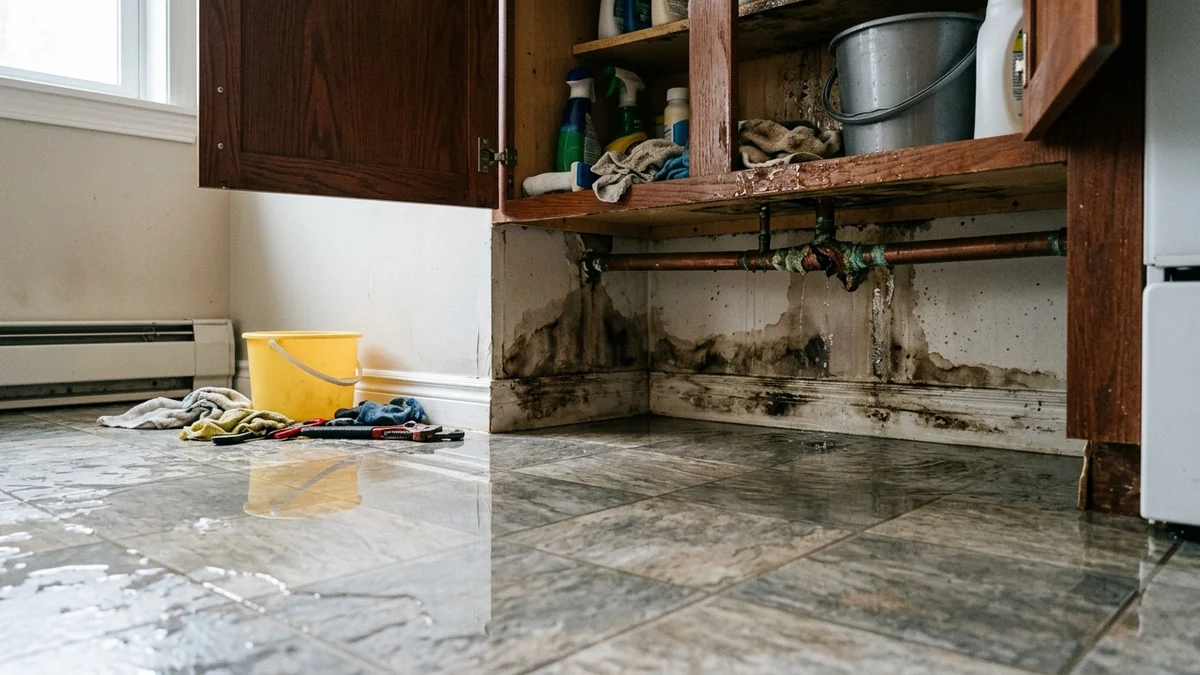
A sudden structural failure in your water heater tank sends dozens of gallons of scalding water rushing across your utility closet floor. Saturated drywall is already wicking up the hot, rusty water, threatening to ruin your surrounding carpet and baseboards. You need professional extraction before the high heat and moisture trigger rapid mold growth.
Direct Answer: Water Heater Leak Cleanup
Water heater leak cleanup in Orlando requires immediate shutoff of the cold supply valve and electrical breaker, bulk hot water extraction, and commercial structural drying. Heated water rapidly destabilizes drywall, adhesive, and subfloors. Orlando Rapid Restoration connects homeowners with licensed, insured local technicians at (407) 557-9924 for urgent water extraction and moisture mitigation.

What This Service Covers
- Fast shutoff of the water heater intake valve and electrical supply.
- Safe draining of the ruptured water heater tank.
- Hot water extraction from carpets, concrete slabs, and floorboards.
- Drywall wicking prevention and containment wall drying.
- Rust stain removal and antimicrobial wash of closet surfaces.
Why This Happens in Orlando Homes
Orlando's hard groundwater is packed with calcium and minerals that accumulate at the bottom of heating tanks over time. This sediment buildup, combined with constant thermal expansion in Florida's warm climate, corrodes the inner tank lining until it ruptures.
Our Process for Water Heater Cleanup
We use target drying systems to completely dry small closets and adjacent floorboards.
Energy & Water Isolation
We safely shut down the unit's electrical breaker or gas supply, shut off the incoming water supply, and drain the remaining water.
Scalding Water Extraction
Saturated surfaces are vacuumed using high-temperature-tolerant extraction tools to remove the hot, mineral-heavy water.
Containment & Baseboard Removal
We carefully remove vinyl baseboards to allow trapped moisture behind the utility closet walls to escape.
Targeted Drying Matrix
Commercial air movers and LGR dehumidifiers are focused directly inside the closet to dry the drywall cavities and subfloor.
Local Field Note
Utility closets in Lake Nona townhomes are often located in tight, unconditioned spaces where heat accelerates mold growth. We recently extracted fifty gallons of rusty water from a closet there, completing dry-out in under forty-eight hours to keep the home mold-free.
What Makes Water Heater Leaks in Orlando Homes So Destructive?
A failed water heater releases between 40 and 80 gallons of scalding, pressurized water in minutes. Unlike cold water supply pipe breaks, hot water acts as an accelerated solvent. Thermal energy dramatically speeds up the deterioration of wood fibers, dissolves moisture-resistant glue in luxury vinyl plank (LVP) and laminate floors, and weakens subfloor adhesives.
Furthermore, because water heaters are often plumbed directly into the municipal line, a ruptured tank or continuous supply line breach does not stop draining once the 50-gallon tank empties. The pressurized cold intake pipe continues pumping municipal water into the ruptured vessel, discharging hundreds of gallons across living areas until someone manually closes the shutoff valve. Orlando Rapid Restoration connects Orlando homeowners with licensed, insured local water damage restoration professionals ready around the clock at (407) 557-9924.
If water spreads into adjacent rooms, homeowners often face simultaneous damage to wallboard, insulation, and soft surfaces. In such instances, combining water heater mitigation with targeted wet carpet water extraction and structural drying protects floor joists and framing from irreversible rotting.
Why Do Central Florida Water Heaters Fail and Rupture Prematurely?
Water heaters in Central Florida experience shorter lifespans than units in cooler, soft-water climates. Several environmental and regional plumbing factors trigger sudden tank failure in Orange and Osceola County homes:
High Groundwater Mineral Content
Orlando municipal aquifers contain substantial calcium carbonate, magnesium, and lime. Over years of thermal cycling, hard water minerals precipitate out of solution and settle on the tank floor, insulating heating elements and causing bottom steel plates to crack.
Attic and Garage Thermal Stresses
Many Florida builders locate hot water heaters in unconditioned garages or elevated attics where ambient temperatures exceed 130°F during summer months. Extreme internal and external pressure spikes strain tank welds and temperature-and-pressure relief valves.
Sacrificial Anode Rod Depletion
Magnesium or aluminum anode rods safeguard inner steel tank linings by corroding sacrificially. In aggressive Central Florida tap water, anode rods degrade within 3 to 5 years, leaving bare steel walls vulnerable to rapid galvanic corrosion and pinhole punctures.
Clogged Drain Pans & TPR Discharge Lines
Safety drain pans beneath water heaters are supposed to route overflow water outdoors via PVC discharge piping. Over time, mud daubers, algae slime, and dust plug discharge outlets, causing leaking water to pour directly into drywall cavities.
Attic, Garage, and Utility Closet Water Heater Flooding Risks Across Orlando
The layout and architecture of local residences dictate how water distributes when a tank bursts. In older single-story ranch homes in Pine Hills or Winter Garden, water heaters are typically positioned in garage nooks on concrete slabs. While garage concrete is durable, water sweeps beneath sill plates directly into adjoining carpeted master bedrooms or family rooms.
In multi-story homes and modern developments across Lake Nona, Avalon Park, and Metro West, water heaters are frequently mounted in upstairs utility closets or roof attic trusses to save living footprint. When an overhead attic water heater fails, cascading water saturates ceiling drywall, attic blown-in insulation, and light fixtures, requiring immediate ceiling leak water damage repair and overhead moisture mapping before heavy sheetrock collapses.
Townhomes and condominiums in downtown Orlando and Kissimmee face multi-unit liabilities. Leaking tanks in interior closets rapidly penetrate common party walls, compromising neighboring units through shared floor assemblies and electrical chases.
Professional Extraction and Structural Drying Steps for Water Heater Failures
Restoring a property after hot water tank failure requires rigorous industrial procedures to eliminate deep-seated moisture before microbial colonies form in Florida's sweltering humidity:
-
1
Precision Moisture Detection: Technicians inspect drywall, subfloors, and adjacent closets using FLIR infrared thermography and high-frequency non-penetrating moisture meters to trace the exact boundaries of migrating water.
-
2
Continuous High-Volume Extraction: Commercial extraction units remove standing scalding water, sediment, and rust slurry from floorboards, tile grout, and concrete slab depressions.
-
3
Utility Closet Aeration & Baseboard Removal: Technicians detach swelling baseboards and drill small inspection holes beneath base lines to allow pressurized air movers to force dry air directly through internal stud bays.
-
4
LGR Dehumidification & Antimicrobial Wash: Low-grain refrigerant (LGR) dehumidifiers pull moisture vapor from ambient air while botanical antimicrobial washes prevent mold spores and neutralize pungent stagnant tank odors. If drywall or subflooring is permanently softened, certified crews coordinate with reconstruction and rebuild services for seamless repair.
How to Protect Your Home and Flooring While Waiting for Emergency Crews
When a water heater bursts, immediate homeowner containment minimizes total structural repair costs. Follow these critical safety steps before mitigation teams arrive:
- Shut Off Power or Gas: Turn off the dedicated double-pole 240V breaker in your main electric panel, or rotate the gas control valve to "OFF" to prevent heating elements from dry-firing or creating electrical hazards.
- Close Cold Water Supply Valve: Turn the gate valve clockwise or switch the quarter-turn ball valve on the cold water inlet pipe above the unit. If the valve is corroded or frozen, turn off the whole-house main water meter shutoff valve at the curb.
- Avoid Scalding Water: The water escaping the tank can exceed 120°F to 140°F. Never attempt to bail standing hot water barehanded. Wear protective rubber footwear.
- Elevate Porous Belongings: Place plastic wrap or aluminum foil under wooden furniture legs and lift rugs, cardboard boxes, and laundry off surrounding floors.
- Call Local Dispatch: Connect with local mitigation crews immediately through Orlando Rapid Restoration at (407) 557-9924.
Water Heater Leak Comparison: Bottom Tank Burst vs. TPR Valve vs. Flex Line Failure
Hot water heater malfunctions differ significantly in volume, temperature impact, and the speed at which flooring adhesives degrade:
| Failure Mode | Discharge Volume & Dynamics | Thermal & Flooring Impact | Emergency Mitigation Priority |
|---|---|---|---|
| Bottom Tank Corrosion Rupture | 40 to 80 gallons released rapidly, plus continuous incoming supply | Scalding water dissolves vinyl/laminate adhesive and saturates drywall | Immediate cold valve and breaker shutoff; commercial hot water extraction |
| TPR Valve Pressure Release | Continuous pressurized stream into overflow pan or closet floor | High thermal stress; overflows un-drained pan into adjacent baseboards | Power shutoff, relieve tank pressure, drain tank, dry closet cavities |
| Attic Water Heater Tank Leak | Water cascades through ceiling drywall and blown-in insulation | Wet insulation weight threatens ceiling collapse into living quarters below | Drill relief holes, catch water, extract carpets, deploy LGR dehumidifiers |
| Braided Flex Line Connector Leak | High-pressure spray against utility closet drywall and studs | Wicking moisture climbs up drywall; water creeps under flooring planks | Replace line fitting, remove vinyl baseboards, inject dry air into wall bays |
How fast does mold grow after a hot water heater leak?
Mold grows exceptionally fast after a water heater leak because the water is warm, which creates a perfect incubation environment when combined with Orlando's high humidity. Spores can begin germinating within twelve to eighteen hours on damp drywall, making immediate extraction and drying critical.
What causes a water heater tank to suddenly burst?
Over time, mineral deposits and sediment settle at the bottom of the tank, acting as an insulating barrier that causes the burner or heating elements to overheat. This constant overheating weakens the steel tank wall and causes microscopic cracks that eventually fail under pressure.
Can you extract water from the carpet outside the water heater closet?
Yes, we use heavy-duty weighted extraction tools to pull water out of the carpet and padding without removing the carpet if possible. If the water was rusty, we apply specialized browning spotters to remove rust stains and ensure your carpet looks pristine.
Will my insurance pay for a new water heater and the cleanup?
While homeowners insurance typically covers the water damage cleanup, structural drying, and flooring repairs caused by the leak, it usually does not cover the cost of buying a new water heater unit itself, as that is considered standard appliance maintenance.
Where are water heaters typically installed in Orlando homes, and how does location impact leak damage?
In Orlando, water heaters are commonly placed in garage utility corners, hallway interior closets, or occasionally attic spaces. Attic failures produce catastrophic multi-floor ceiling collapses, while closet ruptures flood neighboring carpet, baseboards, and drywall through capillary action across the concrete slab.
What is a temperature and pressure relief (TPR) valve failure, and why does it cause flooding?
The TPR valve is an essential safety mechanism engineered to release water if pressure or heat exceeds safe thresholds. When the valve sticks open or the discharge pipe leaks inside an un-drained pan, scalding water steadily overflows into surrounding living quarters and wall cavities.
How does hot water from a water heater leak damage concrete slabs and flooring adhesives?
Heated water breaks down chemical binders in vinyl, luxury vinyl plank (LVP), and wood floor adhesives much faster than cold water. In Orlando homes on monolithic concrete slabs, hot moisture also drives deep into the porous slab, necessitating industrial dehumidification to prevent later floor bubbling.
Can water from a ruptured water heater seep underneath kitchen or laundry cabinetry?
Yes. Water flows along base plates and rapidly wicks into toe-kicks and bottom shelving of adjoining cabinets. Technicians utilize targeted cavity injection dryers and toe-kick air adapters to remove hidden moisture without having to demolish intact custom cabinetry.
Urgent Water Heater Leak Cleanup
Every hour hot water sits in your home, drywall dissolves and mold spreads. Contact our local drying experts right now.