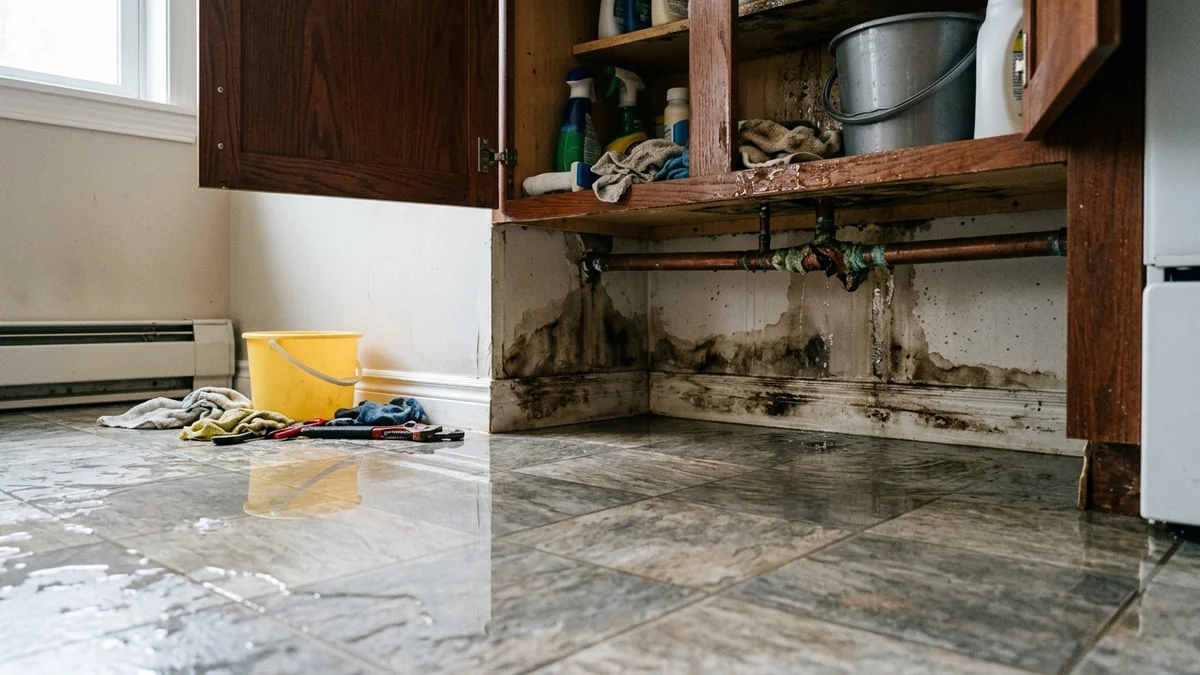
A fractured residential water supply line under forty pounds of city pressure pumps up to eight gallons of water across your floors every single minute. In Central Florida, that rapid volume soaks through baseboards into wall cavities where high summer heat and humidity start degrading drywall immediately.
Orlando Rapid Restoration has answered emergency plumbing calls across Orange County since 2008. Waiting allows moisture to migrate deep into framing, subfloors, and insulation. Taking prompt action during your opening day prevents structural rot.
How Do You Shut Off the Water Supply and Secure Your Home?
Locate and turn off your main water shutoff valve the moment you discover standing water. In single-family properties throughout Winter Park and College Park, this valve sits near your curb water meter box or along the exterior side wall by the garage. Use a curb key or an adjustable wrench to rotate the gate or ball valve ninety degrees clockwise until the flow stops. If you occupy a multistory condominium in Downtown Orlando or a townhome in Lake Nona, alert your building maintenance staff immediately so they can isolate the main riser valve.
Switch off circuit breakers feeding flooded rooms at your electrical panel before stepping into standing water. Water conducting through baseboard outlets creates severe shock hazards. Keep family and pets away until power to those rooms is completely disconnected.
Raise furniture off wet carpets and tile by placing aluminum foil squares under wooden legs. In older neighborhoods like College Park and Mills 50 District, antique furniture finishes bleed tannins into wet flooring, causing permanent stains that complicate recovery.
Why Does Orlando Humidity Accelerate Drywall and Structural Damage?
Central Florida maintains outdoor relative humidity levels exceeding 70 percent throughout much of the year. When an indoor pipe fails, moisture cannot evaporate naturally into the dense surrounding air. Water wicks upward through porous gypsum drywall panels via capillary action, climbing up to twenty inches inside wall cavities within four hours of the initial break.
Many residences constructed from the late 1990s through the mid 2000s in master-planned communities like Baldwin Park and Lake Nona utilize chlorinated polyvinyl chloride (CPVC) water lines. Prolonged exposure to attic heat causes CPVC joints to turn brittle, leading to sudden lateral splits along pressurized ceiling runs. Municipal tap water in Orlando averages 77 degrees Fahrenheit inside distribution lines. That warm water accelerates microbial germination inside damp wall assemblies within 24 to 48 hours of initial wetting.
Wiping floors with household bath towels only removes surface puddles while leaving gallons of moisture trapped beneath baseboards and floor transitions. Scheduling professional burst pipe water damage cleanup ensures technicians extract hidden moisture out of wall cavities, preventing drywall core degradation and microbial outbreaks.
How Should You Document Water Damage for Florida Homeowners Insurance?
Capture digital photo and video evidence before moving possessions or wet carpets. Adjusters require clear records of initial water boundaries for Florida HO-3 policies. Record video showing water depth against door casings, baseboards, and drywall.
Take close-up photos of damaged pipe fittings and flooded appliances. Create an itemized list of affected possessions and store photos in cloud storage for your adjuster.
Do not discard cut drywall, soaked insulation, or pipe fittings until your carrier inspects the site. Keeping physical evidence avoids claim disputes over accidental failure. Our team logs daily moisture readings and uses standard Xactimate software to file billing directly with your insurer.
What Equipment Dries Saturated Walls and Subflooring Safely?
Household fans only move damp air across wet floors without lowering indoor humidity. Trapped moisture remains behind cabinets and under luxury vinyl planks. Structural drying requires industrial moisture extraction calibrated to your flooded space.
Our field crews deploy specialized drying hardware to pull moisture out of structural materials:
- Heavy-duty truck-mounted vacuum extractors that remove standing water from concrete slabs and carpet pads.
- Industrial low grain refrigerant (LGR) dehumidifiers that extract dozens of gallons of atmospheric moisture daily.
- Centrifugal air movers directed toward wall cavities to evaporate hidden moisture pockets.
- Infrared thermal imaging cameras that trace cold moisture paths through ceilings and perimeter walls.
Calling an emergency crew for professional emergency water extraction within the first day halts wood rot and saves original flooring assemblies. Certified technicians monitor moisture content daily until every structural element reaches dry standard goals.
Frequently Asked Questions: Burst Pipes in Orlando
What should I do first when a pipe bursts in my home?
Shut off your main water valve immediately at the street meter box or exterior garage wall. Flip off the electrical breakers to any flooded rooms to eliminate electrocution hazards. Call Orlando Rapid Restoration at (407) 557-9924 for 24/7 extraction before moving wet furniture or mopping pooled water.
Can a burst pipe cause mold if I clean it up fast?
Yes. Orlando summer temperatures and 70 percent ambient humidity cause mold spores to germinate inside saturated wall cavities within 24 to 48 hours. Surface mopping and box fans leave gallons of trapped moisture under baseboards, requiring commercial low grain refrigerant dehumidifiers and centrifugal air movers to prevent microbial growth.
Should I call my insurance company before or after calling a restoration crew?
Call a certified emergency restoration crew first. Your Florida homeowners policy requires you to take immediate reasonable steps to prevent further property damage. An emergency dispatch team halts structural saturation right away, documents water depth with photo evidence, and assists you in filing your carrier claim using standardized Xactimate billing.
A burst water pipe creates immediate stress. Decisive action in the first twenty-four hours protects your home framing and contains repair costs. Our IICRC-certified technicians bring industrial extraction equipment directly to your door day or night.
Contact Orlando Rapid Restoration at (407) 557-9924 to dispatch an emergency response technician to your property within 45 minutes.