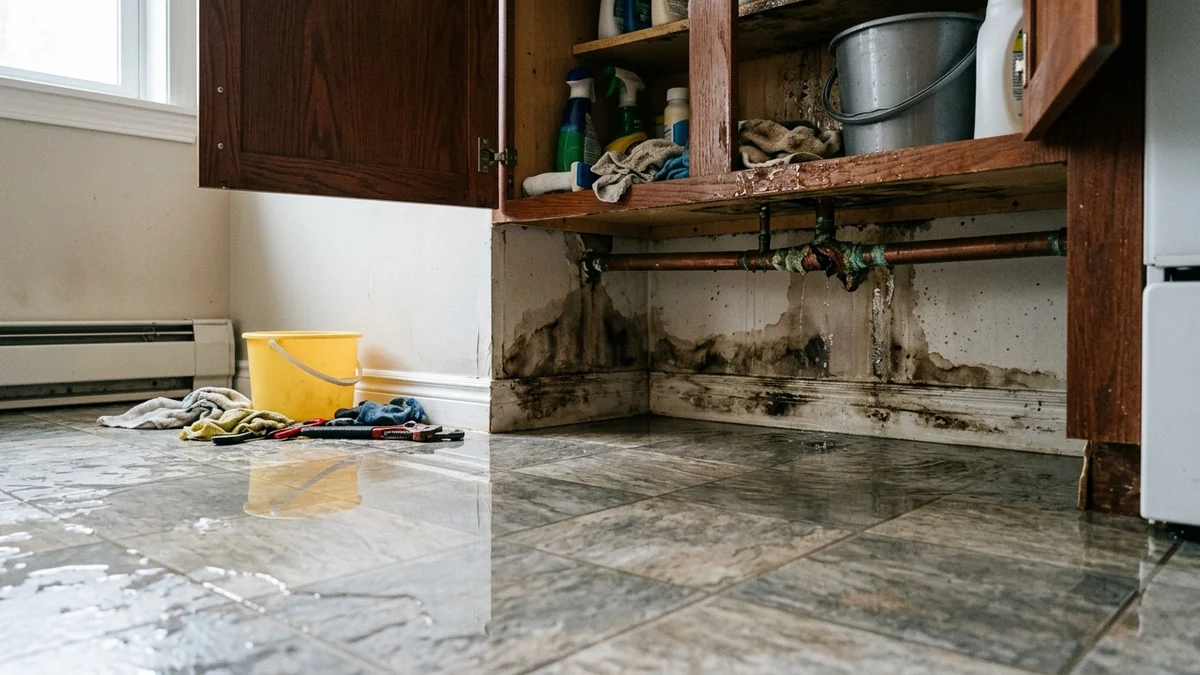
A burst water heater is different from a slow drip. A ruptured tank can empty its contents onto your floor in a short time, and the water is hot. The good news is that the first steps are simple, and taking them quickly limits most of the damage.
This guide covers the first hour only. It is not about water heater lifespan or replacement choices — it is about what to do while water is on your floor.
Need Help Right Now?
Talk directly with our restoration team. Free on-site assessment, plain-language answers, no pressure.
Call Now: (407) 557-9924What Do I Do in the First Few Minutes?
- Stay clear of hot water. Tank water can scald. Do not step into pooled hot water in bare feet.
- Shut off the cold water supply to the heater. This valve is usually on the cold inlet pipe at the top of the tank. Closing it stops new water from feeding the leak.
- Turn off the heater's energy supply. For an electric heater, switch off its breaker. For a gas heater, turn the gas control knob to off or pilot, following the instructions printed on the unit. If you smell gas, leave the area and call your gas utility.
- If water is near outlets or appliances, switch off power to that area at the breaker panel, using dry hands from a dry spot.
- If the supply valve will not close, shut off the home's main water valve.
Should I Drain the Burst Tank?
Draining can reduce further leaking, but only do it if it is safe. The drain valve sits near the bottom of the tank, and the water inside may still be hot. Attach a garden hose to the drain valve and run it to a floor drain or outside, away from the house, then open the valve slowly. If the valve is stuck, corroded, or you are unsure, leave it alone — a plumber can handle it, and forcing a damaged valve can make the leak worse.
Never drain a tank while its heating element or burner is still on. An electric element exposed to air can burn out, and a gas burner with no water in the tank is a hazard. Energy off first, always.
How Do I Contain the Water While Help Is Coming?
Once the supply is off, the remaining job is limiting spread. Use towels to block doorways and keep water out of dry rooms. Move rugs, boxes, and furniture off wet floors. If you have a wet vacuum rated for water, start removing standing water. Open windows if weather allows, run fans, and keep the air conditioning on to pull humidity out of the air.
Water heaters often sit in garages, closets, or utility rooms, and water from them travels fast under doors and into adjoining rooms. Check the rooms next to and below the heater location, not just the heater closet itself.
What Should I Photograph and Save?
Before cleanup changes the scene, photograph the burst tank, the water spread, and any damaged flooring, drywall, and belongings. Note the time you discovered the burst and the steps you took. Keep receipts for emergency purchases. Your insurer will want this record, and it is much harder to reconstruct later.
What Happens When Professionals Arrive?
Professional response follows a clear order: extract standing water, then dry the structure with commercial air movers and dehumidifiers, then assess what can be saved. Wet carpet padding, swollen baseboards, and soaked drywall often need removal, while hard floors and framing usually dry well. A moisture assessment confirms when walls and floors are actually dry before any repair work begins.
A plumber will need to replace or repair the failed heater itself — restoration work covers the water damage, not the appliance. For the cleanup side, our water heater leak cleanup and emergency water extraction teams respond across Orlando. Call (407) 557-9924 as soon as the water is stopped.
Related services: water heater leak cleanup, emergency water extraction